November 22, 2024
Breaking Bread and Building Brotherhood: The Monthly Men's Prayer Breakfast Movement
How early morning gatherings are transforming men's spiritual lives and strengthening community bonds through fellowship, accountability, and shared purpose
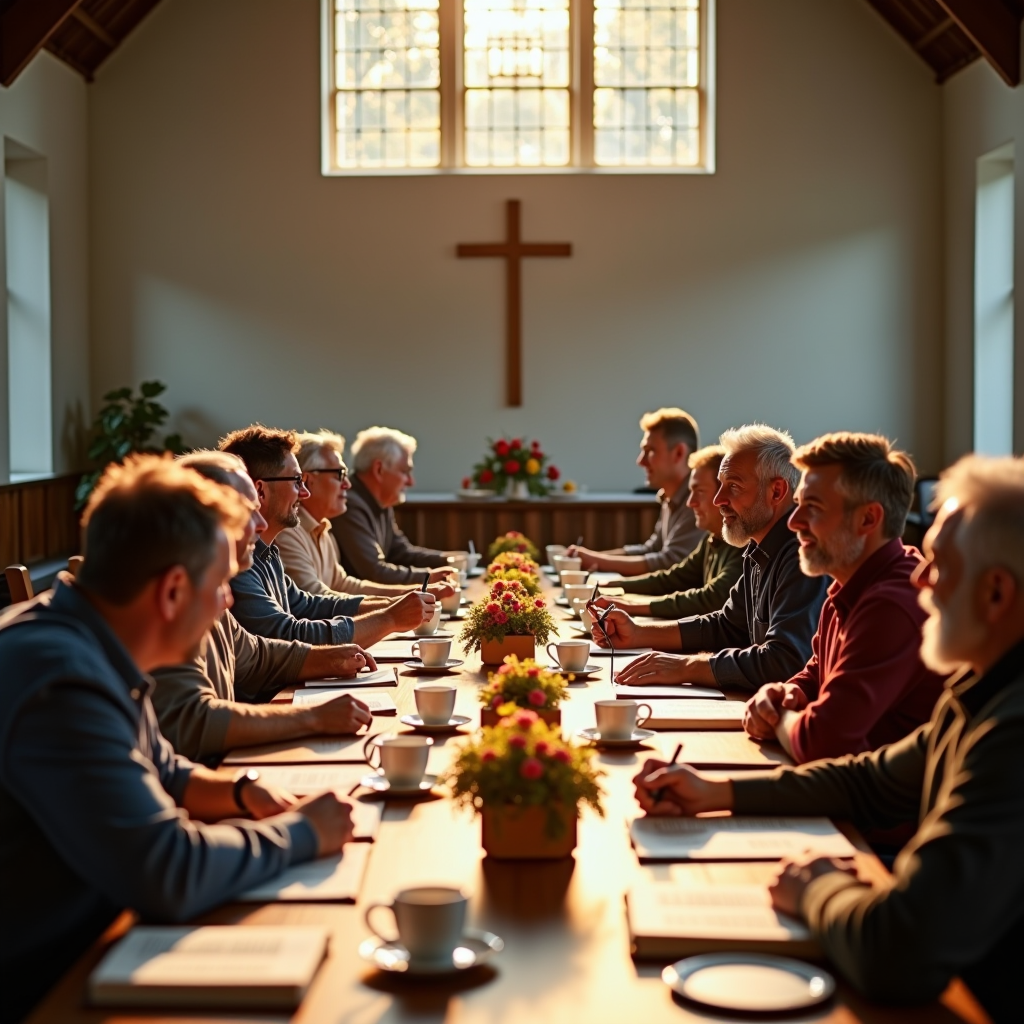
The alarm sounds at 5:30 AM on the third Saturday of every month, and Michael Thompson doesn't hit snooze. Instead, he rises with purpose, knowing that in just over an hour, he'll be sitting shoulder-to-shoulder with dozens of other men who have made the same commitment—to gather before dawn, share a meal, and strengthen their faith together. This is the Men's Prayer Breakfast, a grassroots movement that has been quietly transforming lives and building authentic Christian brotherhood across communities nationwide.
What began five years ago as a small gathering of eight men in a church basement has evolved into a thriving ministry that now serves over 120 regular attendees and has inspired similar programs in more than thirty communities. The concept is deceptively simple: men gathering monthly for breakfast, prayer, and honest conversation about the challenges they face as husbands, fathers, leaders, and followers of Christ. Yet the impact has been anything but simple, creating ripple effects that extend far beyond the fellowship hall and into homes, workplaces, and the broader community.
The Power of Intentional Gathering
In an era where men's isolation and disconnection have reached crisis levels, the monthly prayer breakfast offers something increasingly rare: a dedicated space for authentic male fellowship grounded in faith. Research consistently shows that men struggle more than women with forming deep friendships and maintaining accountability relationships, particularly after marriage and career advancement. The structured yet welcoming format of these gatherings addresses this gap head-on.
"I had plenty of acquaintances but no real brothers in Christ," admits James Rodriguez, a 42-year-old business owner who has attended every breakfast for the past three years. "I could talk sports or business with guys at church, but I had no one I could be real with about my struggles with anger, my fears about being a good father, or my questions about my faith. This breakfast changed that completely."
The gatherings follow a consistent rhythm that participants say creates both comfort and anticipation. Men arrive between 6:30 and 7:00 AM, greeted by the aroma of fresh coffee and a hot breakfast prepared by a rotating team of volunteers. The meal itself—typically featuring eggs, bacon, biscuits, and fruit—serves as more than sustenance; it's a deliberate act of hospitality that sets a tone of warmth and welcome. Breaking bread together, organizers note, has been a cornerstone of Christian fellowship since the earliest days of the church.
After breakfast, the formal program begins with worship music, often led by talented musicians from within the group. The singing, participants report, helps transition hearts and minds from the week's concerns to a posture of openness and worship. This is followed by a brief teaching or testimony, typically lasting 20-30 minutes, that addresses practical aspects of Christian manhood—topics like integrity in business, servant leadership at home, managing stress and anxiety, navigating difficult conversations, and maintaining sexual purity in a hypersexualized culture.
Accountability That Actually Works
What distinguishes this prayer breakfast from casual men's gatherings is its emphasis on genuine accountability. After the main teaching, men break into smaller groups of 4-6 participants—groups that remain consistent month to month, allowing relationships to deepen over time. These small groups are where the real transformation happens, where men move beyond surface-level conversation to share their actual struggles, confess their failures, and commit to specific areas of growth.
"The small group is where I learned what Christian brotherhood really means," shares David Chen, a 38-year-old engineer and father of three. "These guys know my weaknesses. They know when I'm struggling with work-life balance or when I'm being short-tempered with my kids. They ask me the hard questions every month, and they pray for me by name. I can't hide, and I don't want to. That accountability has saved my marriage and made me a better father."
The accountability structure includes several key elements that participants credit with its effectiveness. First, each small group establishes clear expectations about confidentiality, creating a safe space for vulnerability. Second, members exchange contact information and commit to checking in with each other between monthly meetings, whether through text messages, phone calls, or coffee meetups. Third, the groups use specific accountability questions rather than vague check-ins, asking about concrete areas like time in Scripture, prayer life, marriage relationship, parenting intentionality, workplace integrity, and personal purity.
Marcus Williams, who leads one of the small groups, emphasizes the importance of this specificity. "We don't just ask 'How are you doing?' We ask 'How many days this month did you spend time in God's Word?' and 'What specific steps did you take to serve your wife this week?' and 'Have you viewed any pornography since we last met?' The questions are direct because we're serious about helping each other grow, not just making each other feel comfortable."
Leadership Development Through Practical Wisdom
Beyond accountability, the monthly gatherings serve as an ongoing leadership development program, equipping men to lead with integrity in every sphere of influence. The teaching topics are carefully selected to address the real challenges men face, drawing from Scripture while remaining intensely practical. Recent months have featured sessions on financial stewardship and generosity, navigating career transitions with faith, raising sons and daughters in a confused culture, caring for aging parents, and leading family devotions effectively.
Guest speakers bring diverse perspectives and expertise. Local pastors share biblical wisdom on spiritual leadership. Christian business owners discuss maintaining ethical standards in competitive markets. Marriage counselors offer insights on emotional intelligence and communication. Fathers who have successfully launched adult children share lessons learned. The variety ensures that men at different life stages find relevant, actionable guidance.
"What I appreciate most is that the teaching isn't theoretical," notes Robert Jackson, a 55-year-old executive who has attended for four years. "These are men who have walked the walk, who have faced the same pressures and temptations we face. They share their failures as readily as their successes, and that authenticity makes their wisdom credible and applicable."
The leadership emphasis extends beyond personal development to community impact. The breakfast has spawned numerous service initiatives, from mentoring programs for fatherless boys to job training workshops for unemployed men to home repair projects for widows and single mothers. Participants report that the combination of spiritual formation and practical service creates a holistic approach to Christian manhood that feels both challenging and deeply fulfilling.
Family Values Strengthened Through Brotherhood
Perhaps the most significant impact of the prayer breakfast movement has been its effect on participants' families. Wives consistently report positive changes in their husbands—greater patience, improved communication, increased spiritual leadership, and more intentional engagement with children. The monthly rhythm of gathering with other committed Christian men seems to provide both inspiration and accountability that translates directly into home life.
"My husband comes home from these breakfasts energized and focused," shares Jennifer Thompson, Michael's wife. "He's more present with our kids, more proactive about leading family devotions, and more willing to have difficult conversations when needed. I can tell he's being challenged and encouraged by the other men, and our whole family benefits from that."
The breakfast has also created unexpected opportunities for fathers and sons to connect. Several participants now bring their teenage sons to the gatherings, introducing them to a community of godly men who model Christian manhood. These young men witness their fathers being vulnerable, asking for prayer, and committing to growth—powerful lessons that no lecture could convey as effectively.
Thomas Anderson, who started attending with his 16-year-old son last year, describes the experience as transformative for their relationship. "My son sees me in a different light now. He sees that I don't have all the answers, that I'm still learning and growing, that I need other men to help me be the man God calls me to be. That vulnerability has opened up conversations between us that I never thought possible. He's more willing to share his own struggles because he's seen me share mine."
Starting Your Own Prayer Breakfast Initiative
The success of this model has inspired men in other communities to launch similar initiatives, and the original organizers have developed a comprehensive guide for those interested in starting their own monthly men's prayer breakfast. The process, they emphasize, doesn't require extensive resources or professional ministry experience—just a few committed men willing to invest time and energy into building authentic Christian fellowship.
The first step is gathering a core team of 3-5 men who share the vision and will commit to the planning and execution. This team should represent diverse ages and life stages, bringing different perspectives and networks. Their initial task is to secure a location—typically a church fellowship hall, community center, or restaurant private room—and establish a consistent schedule. Monthly gatherings work well because they're frequent enough to maintain momentum but not so frequent that they become burdensome.
Next comes developing the format and structure. While flexibility is important, consistency helps men know what to expect and creates a rhythm that facilitates deeper engagement. The recommended structure includes a 30-minute arrival and breakfast period, 15-20 minutes of worship, 20-30 minutes of teaching or testimony, and 30-40 minutes of small group discussion and prayer. The entire gathering typically runs from 7:00 AM to 9:00 AM, allowing men to still have most of their Saturday available for family and other commitments.
Funding is simpler than many assume. Most successful breakfasts operate on a free-will offering model, with suggested donations of $5-10 per person to cover food costs. Some groups have found sponsors within their church or community willing to subsidize the breakfast to ensure that cost never prevents participation. The key is keeping expenses minimal and focusing resources on creating a welcoming environment rather than elaborate productions.
Promotion should emphasize personal invitation over mass marketing. Men are more likely to attend when personally invited by someone they know and respect. The core team should each commit to inviting 5-10 men from their networks, following up with personal phone calls or text messages. Social media and church announcements can supplement but shouldn't replace personal outreach.
Perhaps most importantly, organizers must commit to the long view. The first few gatherings may be small and feel awkward as men learn to open up and trust each other. Growth typically happens slowly as word spreads and men experience the value firsthand. The original breakfast took nearly two years to reach 30 regular attendees, but the foundation built during those early months proved essential for sustainable growth.
The Ripple Effect of Transformed Men
As the monthly men's prayer breakfast movement continues to expand, its impact extends far beyond the individual participants. Churches report stronger male engagement in ministry and service. Workplaces benefit from men who lead with greater integrity and compassion. Families experience the blessing of husbands and fathers who are growing in spiritual maturity and emotional health. Communities see increased volunteerism and mentorship as men channel their renewed sense of purpose into practical service.
The testimonies keep coming. Men who were on the brink of divorce credit the breakfast with saving their marriages. Fathers who felt disconnected from their children describe renewed relationships. Business owners talk about making difficult ethical decisions with the support and prayer of their brothers. Young men speak of finding mentors who guide them through critical life transitions. In each story, common threads emerge: the power of authentic fellowship, the necessity of accountability, and the transformation that happens when men commit to growing together rather than struggling alone.
"This isn't just about a monthly breakfast," reflects Michael Thompson, whose early morning alarm started this journey. "It's about men deciding that mediocrity isn't acceptable, that we're called to something higher and better, and that we need each other to get there. It's about creating a culture where Christian manhood is defined not by what we avoid but by who we're becoming—men of integrity, compassion, courage, and faith. That's worth getting up early for."
As communities across the nation grapple with challenges facing men and families—isolation, addiction, broken relationships, lack of purpose—the monthly men's prayer breakfast offers a proven model for addressing these issues at their root. It demonstrates that when men gather with intentionality, vulnerability, and commitment to growth, transformation happens. Not overnight, and not without effort, but steadily and surely, one breakfast at a time.
For men interested in starting a prayer breakfast in their community or learning more about joining an existing group, resources and guidance are available through local churches and men's ministry networks. The investment of one Saturday morning per month can yield returns that last a lifetime—for you, your family, and your community.